Open Inguinal Hernia Mesh Repair (Lichtenstein)
General Surgery · MRCS Part A & B · Core Trainee
Operative Simulator
Work through the procedure step by step. Tick every item on each checklist to unlock the next step.
Operative Guide
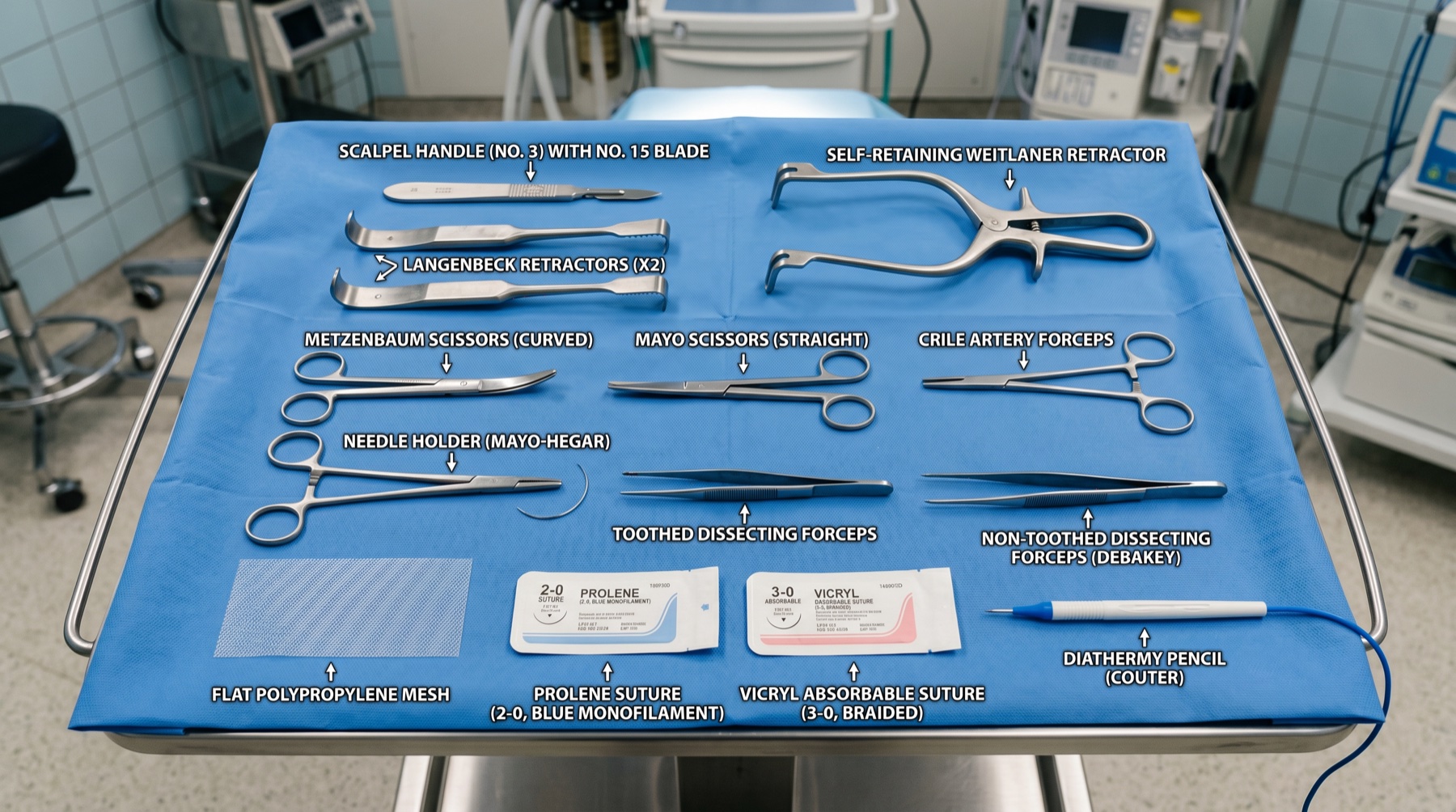
Instruments
Anatomy Danger Zones
Ilioinguinal nerve
Lies on the anterior cord surface and is at risk when opening the external oblique. Damage causes numbness of the scrotum/labia majora and medial thigh, identify it before scissors touch the aponeurosis.
Vas deferens
Runs posteromedially in the spermatic cord. Damage risks subfertility, it feels like a firm cord; identify it before any cord dissection.
Testicular vessels
Run posterolaterally in the cord. Injury or an over-tight internal ring causes ischaemic orchitis and testicular atrophy (~0.5%), keep the keyhole to one fingertip alongside the cord.
Femoral vessels
The external iliac / femoral artery and vein lie deep to the inguinal ligament. At risk from sutures placed too deeply when fixing mesh, bite the ligament superficially, not through it.
Complications
Early
- •Haematoma (~5%), usually managed conservatively
- •Wound infection (~2%)
- •Urinary retention, especially after spinal anaesthesia in men
- •Ischaemic orchitis (~0.5%), painful swollen testis day 2–3, conservative management
- •Scrotal swelling / seroma, common after a large sac, resolves
- •DVT / PE
Late
- •Chronic groin pain (10–12%), most significant; neuropathic or mesh-related, severe in 1–3%
- •Recurrence <1% with mesh, most commonly at the pubic tubercle if overlap is insufficient
- •Mesh infection, rare but serious, may need removal
- •Testicular atrophy, late consequence of ischaemic orchitis
- •Vas deferens injury, subfertility
MCQ Quiz
What is the minimum mesh overlap over the pubic tubercle required to prevent medial recurrence?
Which nerve is most at risk when opening the external oblique aponeurosis?
A 45-year-old man presents 48 hours post right inguinal hernia repair with a painful, swollen, hard right testis and low-grade fever. What is the most likely diagnosis?
A woman presents with a right groin lump below and lateral to the pubic tubercle that does not reduce easily. What is the diagnosis and key implication?
When creating the keyhole in the mesh at the internal ring, how snug should the reconstructed ring be?
Post-op Care
Immediate
- ›Paracetamol + ibuprofen, avoid opiates
- ›Scrotal support and ice pack for the first 24h
- ›Early mobilisation the same day
- ›Oral fluids and diet immediately
Discharge
- ›Day case in most cases
- ›Oral analgesia
- ›Safety-net: return if fever, increasing pain, wound breakdown, inability to pass urine, or a painful swollen testis
- ›Warn that scrotal bruising tracking down from the groin is normal
Follow-up
- ›No routine follow-up for uncomplicated cases
- ›GP review if wound concerns or persistent pain
- ›Histology if a sac was sent
Sick note
- ›Driving 1–2 weeks (when able to perform an emergency stop)
- ›Office work 1–2 weeks
- ›Manual labour 4–6 weeks
- ›No heavy lifting for 6 weeks